
Scientists from the Khaled bin Sultan Living Oceans Foundation have undertaken French Polynesia‘s largest and most comprehensive survey of the health of its coral reefs, and the news shows positive recovery with some sites having more than 55% of living corals.
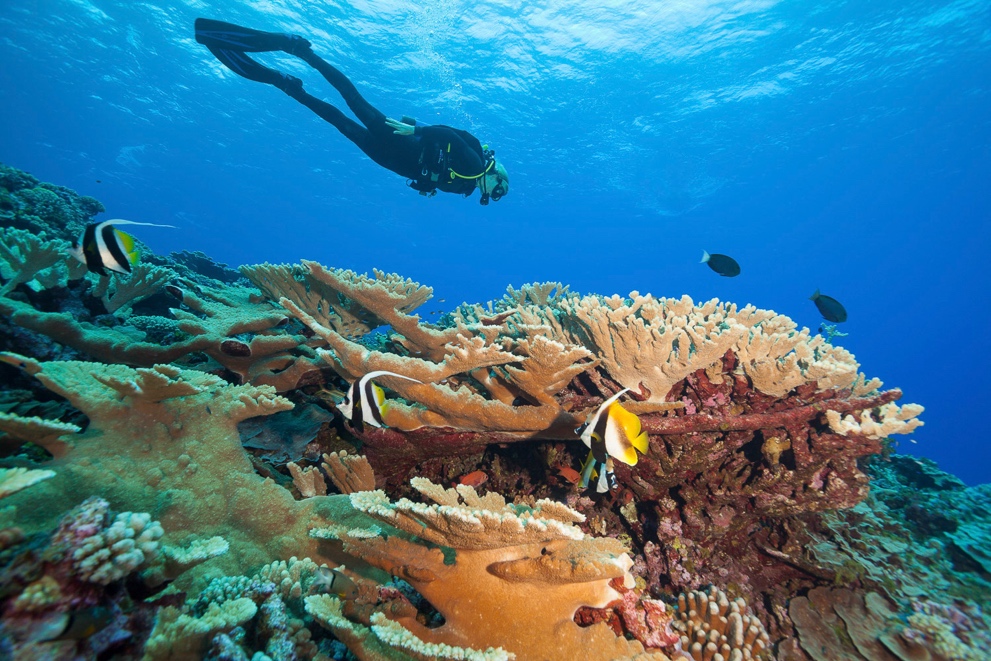
French Polynesia diving ©Michele Westmorland/iLCP
In 2011 the Global Reefs Expedition (GRE) commenced on a five-year mission to study coral reefs around the world. The study in French Polynesia took place from September 2012 to April 2013 and had the following objectives:
- Collect vital data for a global assessment of coral reef health and resilience
- Document the impact of widespread disturbances and recovery patterns, emphasising storm damage and Crown-of-Thorns starfish predation impacts.
- Provide recommendations to help guide Marine Protected Area (MPA) delineation and zoning, protecting French Polynesian reef resources.
- To map and survey coral reef benthic and fish communities around 29 islands in French Polynesia.
The final objective resulted in more than 1,600 benthic coral reef surveys and 2,200 fish surveys conducted on SCUBA at 264 dive sites throughout the country, with more than 9,300 km2 mapped using satellite imagery.
The 66-page report found that the Gambier Archipelago had the highest average coral cover in all of French Polynesia, with 68% live coral recorded. The Tuamotu Archipelago had the next highest amount at an average of 30% live coral which is comparable to other reefs found within the larger South Pacific region. The lowest live coral recorded was only 5%, while the coral diversity across the region ranged from moderate to low.
In terms of reef fish communities, the Tumoatu Archipelago had the greatest diversity and there was an overall correlation between the health of the reef and the size and diversity of the fish communities living there. Also, the higher the human population, the more degraded the fish and benthic communities.
The results are excellent news for luxury yacht charters within the South Pacific region, which are likely to increase with the upcoming Millennium Cup and America’s Cup in New Zealand. Vessels visiting the less densely populated reefs with find more live coral and more diversity in fish species. The Gambier Archipelago and Tumoatu Archipelago have the most to offer visitors, who can view the impressive marine environment without having a lasting impact on recovery.

